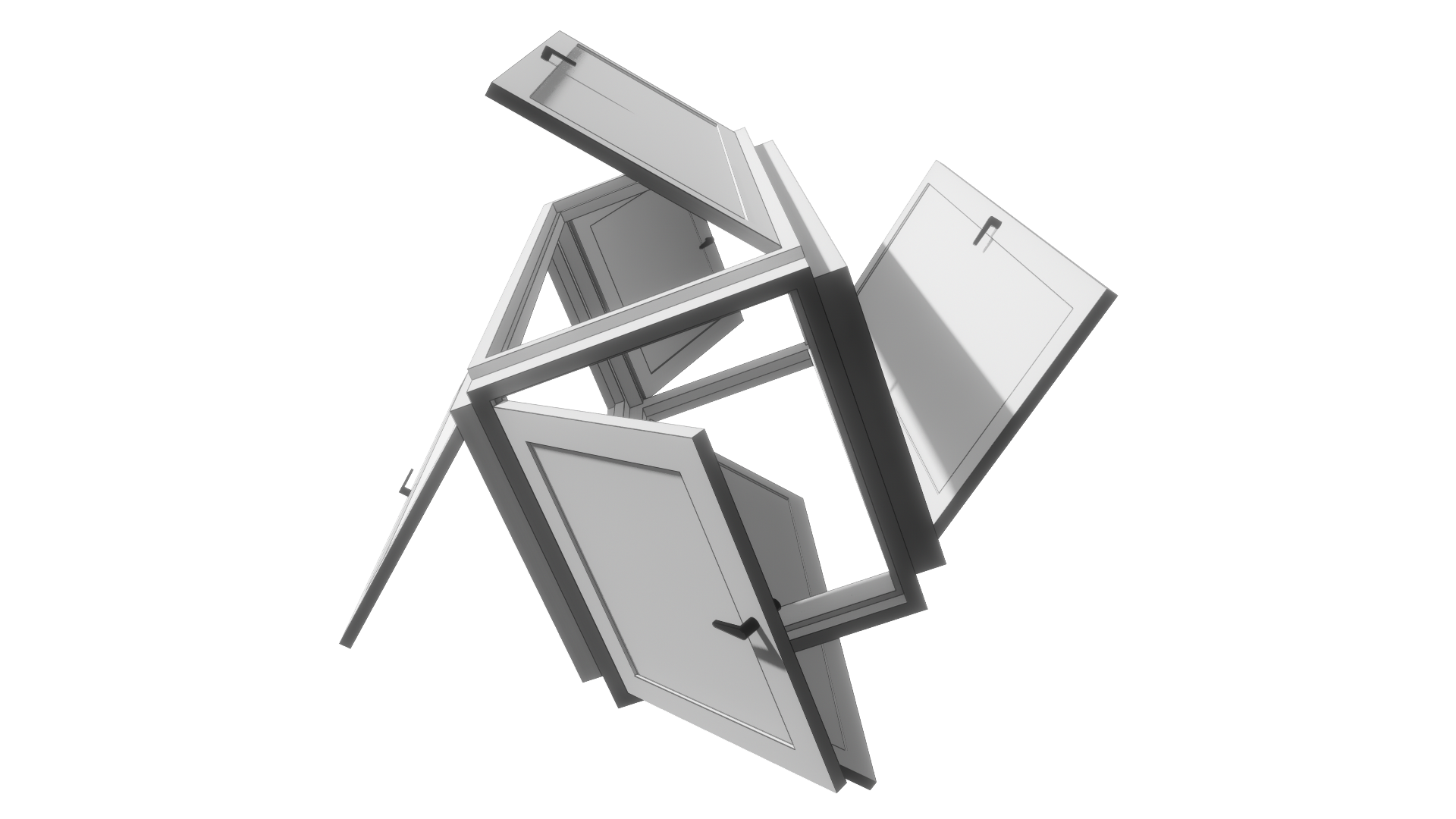
Existenzminimum
Existenzminimum was a housing concept developed in Germany in the 1920s to define the minimum spatial and qualitative conditions required for a dignified life. Emerging from modernist thought, it sought to balance efficiency with habitability. In contemporary contexts, it reappears through micro-housing and co-living models shaped by spatial scarcity.
This project extends the concept into a speculative condition. Walls, floor, and ceiling are constructed entirely from outward-opening doors, transforming enclosure into a system of implied release. Rather than defining interiority, the structure suggests continuous expansion beyond its own limits.